

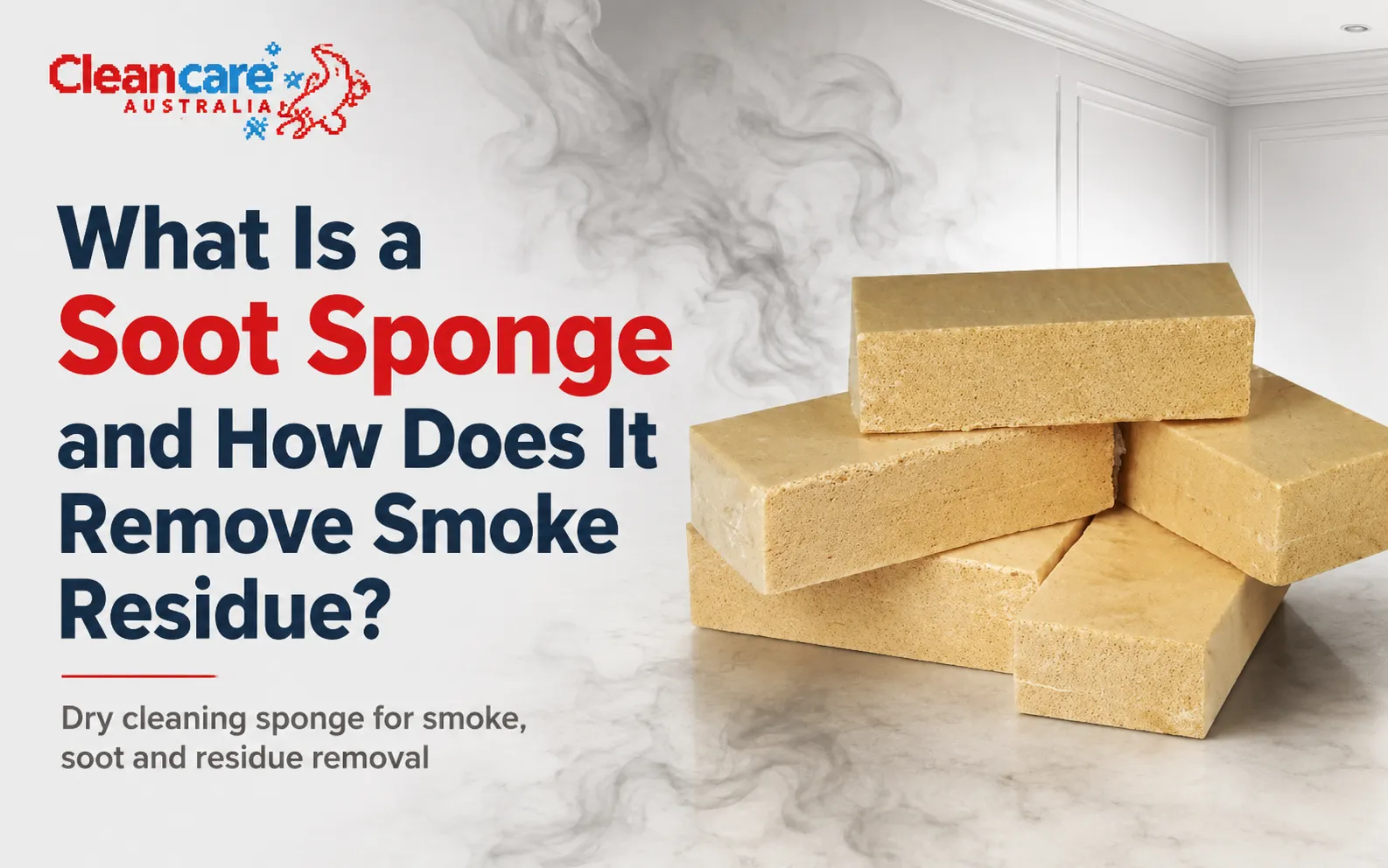
Smoke damage can leave behind more than an unpleasant smell. Fine soot particles may settle on walls, ceilings, decorative surfaces and other materials, where ordinary wiping can sometimes spread the residue rather than remove it. A soot sponge is a specialised dry-cleaning tool designed to collect loose soot and smoke residue without requiring water during the initial cleaning process.
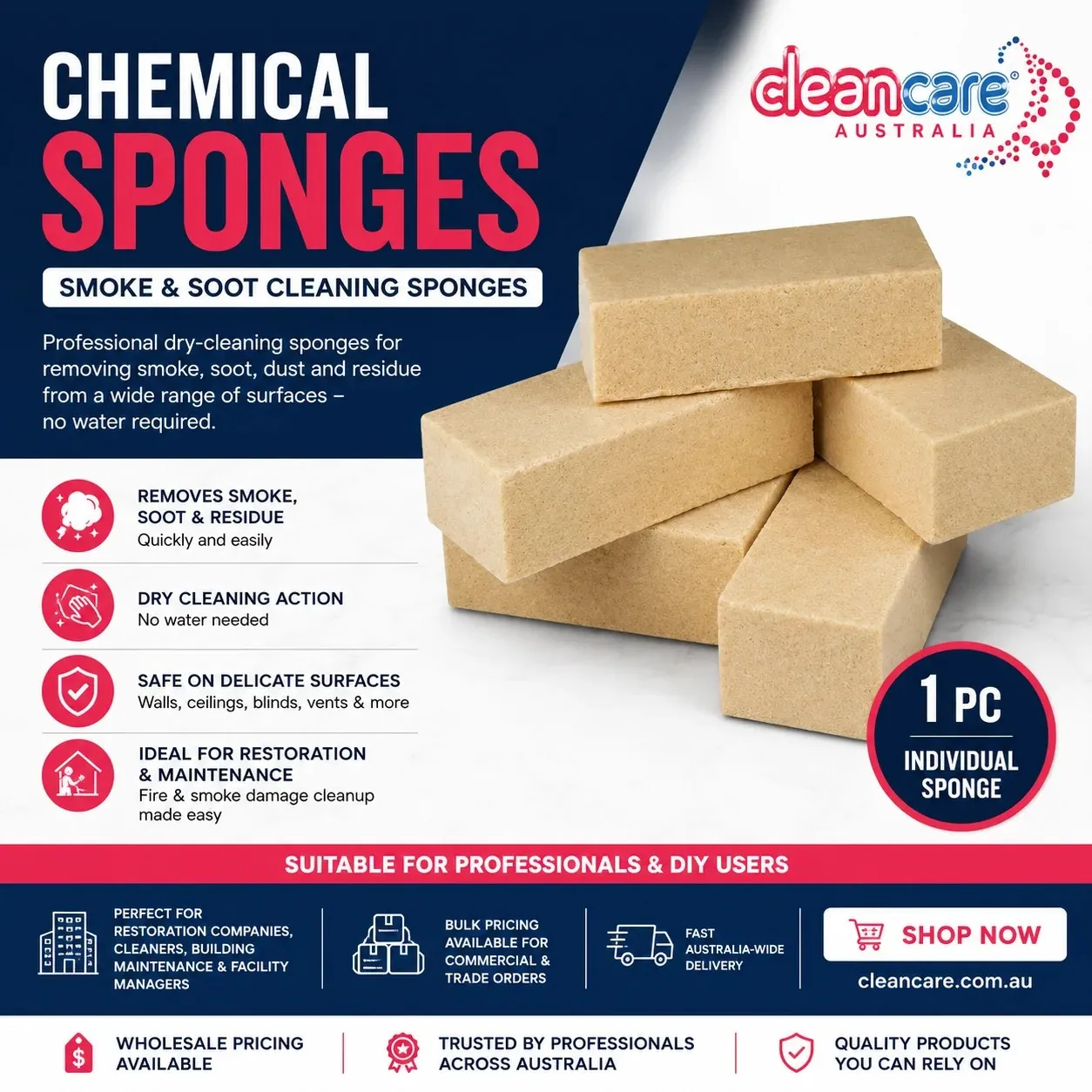
Often called a dry-cleaning sponge, chemical sponge or smoke sponge, this type of cleaning product is commonly used by restoration contractors, professional cleaners, property maintenance teams and homeowners dealing with light smoke contamination. Understanding how the sponge works and how to use it correctly can make the first stage of smoke cleanup more controlled and efficient.
What Is a Soot Sponge?
A soot sponge is different from an ordinary kitchen or household sponge. Rather than being designed to hold water or liquid detergent, it is intended to work dry.
The sponge has a specialised material structure that helps pick up fine particulate contamination from a surface. When it is drawn gently across a smoke-affected area, soot transfers from the surface onto the sponge.
This makes it particularly useful where adding moisture too early could create additional smearing.
Common Uses
A soot sponge may be used during cleaning of:
-
Painted walls
-
Ceilings
-
Wallpaper
-
Panelling
-
Hard-to-reach corners
-
Smoke-affected decorative surfaces
-
Areas exposed to fireplace smoke
-
Surfaces affected by light fire residue
-
Restoration projects requiring an initial dry-cleaning step
The condition and finish of the surface should always be considered before beginning a large cleaning project.
Why Smoke Residue Can Be Difficult to Remove
Soot is made up of very small particles produced by incomplete combustion. These particles can travel through indoor spaces and settle far beyond the immediate source of a fire or smoke event.
The problem with soot is that it can be easily transferred.
Using a damp cloth immediately may cause fine particles to move across the surface. Instead of lifting contamination away, the cleaning action can sometimes create streaks or darker patches.
This is one reason dry cleaning is often considered before introducing liquids.
How Does a Soot Sponge Work?
The process is relatively straightforward.
The sponge is kept dry and gently drawn across the contaminated surface. As the working side collects visible contamination, a clean section of the sponge can be exposed so that dirty material is not continuously transferred back onto the surface.
For larger restoration jobs, technicians typically work methodically in small sections rather than trying to clean an entire wall at once.
A Practical Cleaning Sequence
A simple approach may include:
-
Assess the extent of the smoke contamination.
-
Protect floors and nearby furnishings.
-
Remove loose debris where appropriate.
-
Test an inconspicuous section.
-
Use the sponge dry.
-
Wipe using controlled, gentle strokes.
-
Regularly inspect the working surface of the sponge.
-
Change to a clean section when contamination builds up.
-
Reassess the surface before moving to wet cleaning or refinishing.
Following an organised sequence reduces the risk of spreading contamination around the room.
Where Chemical Sponges Fit Into Restoration Cleaning
Professional restoration is normally a multi-stage process. Dry removal of particulate contamination is often one of the early steps.
Chemical Sponges can be particularly practical for vertical surfaces because the cleaner does not need to continuously apply liquid solution while working.
They may also help technicians assess how deeply contamination has affected a surface. Once loose soot has been removed, it becomes easier to determine whether additional cleaning, sealing, repainting or restoration is necessary.
How to Use a Soot Sponge Correctly
Technique matters.
Keep the Sponge Dry
Do not treat it like an ordinary washing sponge during the dry soot-removal stage. Its main purpose is to collect dry particulate residue.
Avoid Aggressive Scrubbing
Heavy scrubbing can push contamination around or affect delicate finishes. Controlled wiping is usually more suitable.
Start With a Test Area
Before cleaning a complete wall, ceiling or decorative surface, test a small inconspicuous section.
Work From Cleaner Areas Toward Dirtier Areas
This can help reduce the chance of pulling heavy contamination into relatively clean parts of the room.
Inspect the Sponge Frequently
Once the contact surface becomes heavily darkened, expose a cleaner section or replace the sponge as appropriate.
Common Mistakes to Avoid
Smoke restoration can become more difficult when basic cleaning principles are ignored.
Common mistakes include:
-
Adding water before assessing the soot
-
Scrubbing aggressively
-
Using one contaminated face over a large area
-
Cleaning without protecting nearby furnishings
-
Assuming every painted finish reacts the same way
-
Skipping a test patch
-
Painting directly over remaining residue
-
Ignoring smoke contamination above eye level
-
Forgetting ceilings, cornices and upper wall sections
A patient approach generally provides more control than trying to complete the job as quickly as possible.
When Is Professional Restoration Recommended?
Minor smoke residue from a candle, fireplace or small isolated incident may be manageable with appropriate cleaning tools. Larger fire incidents are very different.
Professional assistance should be considered when:
-
Several rooms are affected
-
Heavy soot is present
-
Structural materials have been damaged
-
Electrical systems may have been exposed
-
Contamination has entered ventilation systems
-
Strong persistent odours remain
-
Hazardous materials may be involved
The cleaning sponge is a useful tool, but it is only one part of a complete restoration strategy.
Why Choose CleanCare Australia?
CleanCare Australia supplies professional and domestic cleaning products, equipment and accessories for a wide range of cleaning applications. Its range includes products designed for carpet cleaning, surface care, commercial maintenance and restoration-related work. For cleaners, property managers, restoration contractors and homeowners looking for a practical smoke sponge, CleanCare provides access to purpose-made cleaning products through its Australian operation.
Final Thoughts
Smoke and soot cleanup requires a different approach from routine household cleaning. Starting with an appropriate dry-cleaning method can help reduce unnecessary smearing and provide a cleaner surface for any later restoration steps. By using a soot sponge carefully, testing surfaces first and working methodically, both professional cleaners and property owners can approach light smoke residue with greater control.