

Severe weather can compromise a building’s exterior envelope within minutes, leaving property owners to manage structural repairs and complex financial recovery processes. Following hail storms, high wind events, or heavy rain, filing an insurance claim is often necessary to cover the costs of roof restoration or replacement. However, insurance carriers require clear, detailed proof that property damage resulted directly from a specific weather event rather than long-term wear or neglected maintenance. Thorough documentation serves as the foundation of any successful claim. Understanding how to systematically inspect, record, and organize evidence of storm impact protects policyholders from claim denials, delayed payouts, and out-of-pocket repair costs.
Initial Steps Immediately Following a Severe Storm
The hours following a major weather event are critical for gathering evidence and securing the property against secondary damage. Taking organized action early ensures safety while preserving essential proof for insurance adjusters.
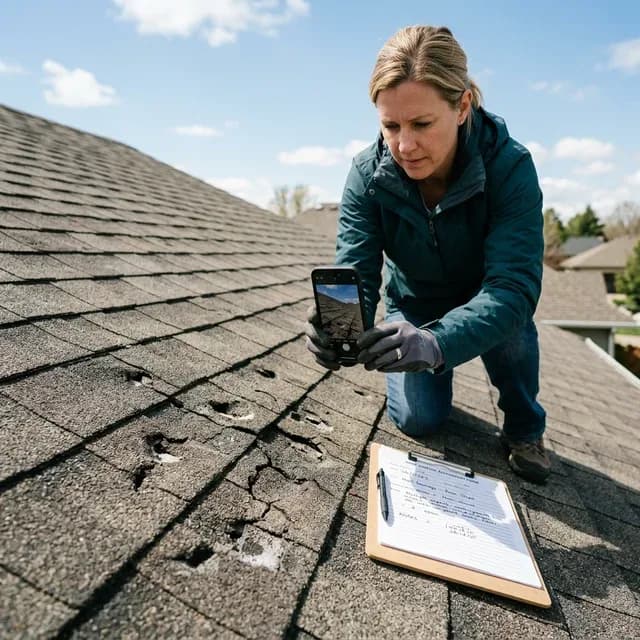
Prioritizing Personal Safety and Exterior Inspection
Before assessing property damage, ensure conditions outside are entirely safe. Avoid walking near downed power lines, unstable tree limbs, or standing water. Homeowners should conduct a preliminary ground-level inspection using a high-resolution camera or binoculars to scan the roofline, gutters, and siding. Climbing onto a storm-damaged roof is hazardous due to loose shingles, weakened decking, and slick surfaces.
Taking Emergency Mitigation Measures
Most insurance policies require property owners to take reasonable steps to prevent further damage after a loss occurs. If high winds or fallen branches have created active roof punctures or ceiling leaks, placing heavy-duty tarps over exposed areas or setting containment buckets beneath interior drips halts moisture progression. Retain all receipts for temporary emergency supplies and tarping services, as these expenses are typically reimbursable under policy coverage terms.
Detailed Photo and Video Documentation Guidelines
Visual evidence forms the backbone of an insurance claim file. Capturing comprehensive photos and videos before making temporary repairs establishes the precise state of the property immediately after the event.
Capturing Exterior Impact Indicators
When photographing exterior damage, capture both wide-angle context shots and detailed close-up images. Important visual indicators include:
-
Shingle and Material Displacement: High winds can crease, lift, or tear away asphalt shingles, leaving exposed underlayment or bare wood decking.
-
Granule Accumulation and Loss: Hail impacts dislodge mineral granules from shingle surfaces. Take close-up photos of bruised shingles as well as heavy granule build-up in gutter troughs or downspout splash blocks.
-
Dents in Soft Metals: Hail leaves clear indentation patterns on soft metal surfaces. Photograph dented gutters, downspouts, aluminum fascia, roof vents, flashing, and window wraps. These metal indicators help adjusters establish the size and direction of hailstones.
-
Tile and Slate Fractures: On clay, concrete, or slate roofs, document cracked, shattered, or displaced tiles, along with damaged mortar beds.
Recording Interior Water Damage
Water intrusion often travels along internal framing before breaking through drywall. Inspect attics, ceilings, and upper-floor wall cavities for water staining, peeling paint, or damp insulation. Photograph these interior areas clearly, using a measuring tape in the frame to record the dimensions of water rings or drywall damage.
|
Inspection Area |
Key Evidence to Document |
Common Indicators of Storm Impact |
|
Roof Deck & Surface |
Missing shingles, cracked tiles, exposed underlayment |
Circular hail impact bruises, wind-creased shingle tabs |
|
Metal Flashing & Trim |
Vent pipes, valley metal, gutters, downspouts |
Uniform dent patterns from hail, torn drip edges |
|
Attic & Interior Spaces |
Roof sheathing underside, ceiling drywall, rafters |
Fresh water staining, active dripping, damp insulation |
|
Perimeter Property |
Fences, window screens, outdoor AC units |
Hail punctures in screen mesh, wind-damaged fencing |
Organizing Property Records and Date Verification
Establishing a clear timeline connects the physical damage directly to a specific storm date, eliminating ambiguity during the adjustment process.
Establishing the Storm Date and Weather Reports
Insurance carriers evaluate claims against verified meteorological records for the specified loss date. Save local news alerts, weather bureau reports, or severe weather radar tracking summaries that confirm hail size or wind gust speeds in the immediate neighborhood on the day of the event.
Compiling Historical Maintenance Records
Adjusters frequently examine whether reported damage stems from storm impact or pre-existing material aging. Maintaining a historical record of past roof inspections, routine maintenance invoices, and previous repair receipts demonstrates that the roof was well-maintained prior to the storm. Showing that the structure was in sound condition prior to the event makes it difficult for an insurer to attribute damage to age or neglect.
When managing significant structural losses or navigating complex coverage terms, consulting a professional specializing in a roof storm damage claim helps property owners obtain itemized repair estimates, detailed engineering assessments, and photo-documented reports suitable for insurance review.
Navigating the Insurance Adjuster Inspection
Once a claim is filed, the insurance carrier assigns an adjuster to inspect the property and estimate the scope of loss. Being prepared for this meeting ensures all documented issues are evaluated fairly.
Presenting Your Documentation File
Provide the adjuster with a organized packet containing dated photographs, weather reports, emergency repair receipts, and past maintenance records. Highlighting specific areas of concern ensures the adjuster does not overlook subtle hail bruising or concealed flashing displacement during their walk-through.
Understanding Summary Estimates and Scope of Loss
After the inspection, the insurance company provides a summary estimate outlining covered repairs, material line items, labor rates, and depreciation calculations. Compare this document carefully against your initial photographic evidence and independent repair estimates to verify that every damaged section of the roof, gutter, and interior is included in the approved scope.
Long-Term Recovery and Property Protection
Documenting storm damage thoroughly turns a stressful disruption into a structured recovery process. By taking immediate safety precautions, capturing comprehensive visual evidence, maintaining clear maintenance histories, and working alongside experienced structural professionals, property owners protect their financial assets. Proper documentation ensures that insurance settlements accurately reflect the true cost of restoring a roof to its pre-storm structural integrity, safeguarding the building against future weather events for years to come.