

A pool deck is more than just an attractive surface for lounging and sunbathing; it serves as a critical structural transition between a swimming pool basin and the surrounding home foundation. Because pool surrounds are subjected to constant water exposure from splashing, filter backwashing, and natural rainfall, managing water flow is essential for long-term property protection. Without an effective drainage system, standing water can penetrate hardscape joints, erode underlying soil, damage nearby home foundations, and create severe slip hazards. Designing and maintaining proper deck drainage safeguards outdoor investments by preventing surface deterioration and structural instability. Understanding how slope pitch, channel drains, surface materials, and soil dynamics interact enables homeowners to establish a safe, durable pool environment built to withstand continuous moisture.
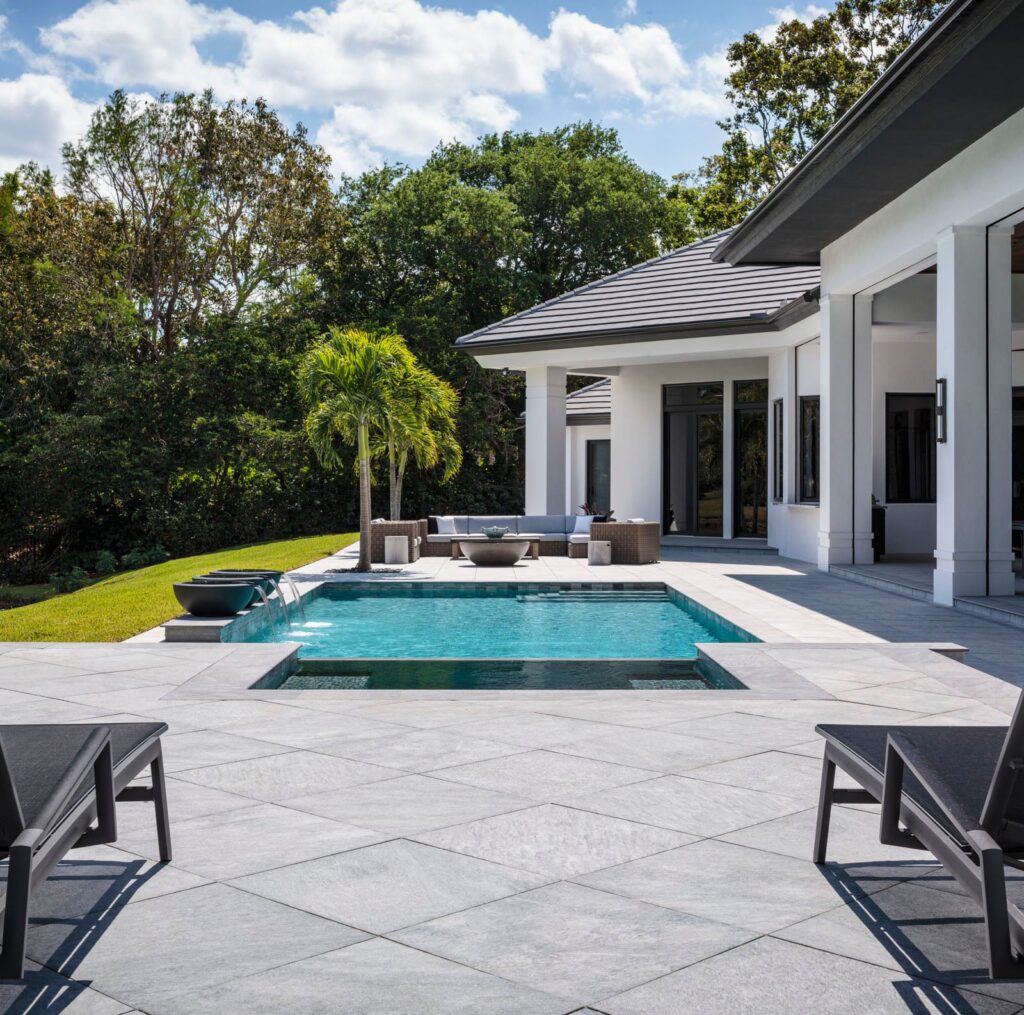
The Hazards of Poor Pool Deck Drainage
When surface water accumulates on a pool deck without a clear path for discharge, it triggers a chain reaction of structural and aesthetic problems. Water is relentless, and unmanaged runoff continuously seeks paths of least resistance, often settling into subsurface layers where it causes silent damage.
Common issues resulting from inadequate drainage include:
-
Subsurface Soil Erosion and Settlement: Water seeping beneath concrete slabs or paver bases washes away compacted sand and aggregate. Over time, this erosion creates underground voids, causing heavy surface pavers or concrete sections to sink, tilt, and crack.
-
Efflorescence and Surface Staining: As moisture evaporates through porous hardscape materials, it carries dissolved mineral salts to the surface, leaving behind unsightly white crusts known as efflorescence.
-
Algae Growth and Slip Hazards: Trapped water on shaded deck sections fosters dark algae blooms, turning decorative stone or concrete into dangerously slick surfaces for bare feet.
-
Foundation and Hardscape Degradation: Runoff sloping toward a house foundation can cause basement dampness, soil expansion, and cracked concrete footings. Furthermore, standing water around pool coping can undermine the structural beam of the pool itself.
Essential Components of an Effective Deck Drainage System
Protecting a pool surround requires integrating specific drainage components into the hardscape during initial construction or surface renovation. A well-designed system collects surface runoff quickly and directs it safely away from the pool edge and home structures.
Pitch and Elevation Slope
The first line of defense in drainage design is proper surface slope. A pool deck should never be perfectly flat. Standards typically require a minimum slope of 1/4 inch per foot (roughly a two percent grade) pitching away from the pool coping toward perimeter collection points. This subtle gradient uses gravity to move water off walking areas without creating a noticeable incline for loungers.
Trench and Channel Drains
Channel drains (also called trench drains) are long, narrow drainage troughs covered with removable grates installed flush with the deck surface. Placed between the pool deck and nearby structures or along flat patio stretches, channel drains capture sheet flow across wide areas. Modern PVC, aluminum, or decorative stone-topped grates blend seamlessly into contemporary hardscape patterns while preventing debris from clogging internal discharge lines.
Point Drains and Area Collection
Point drains are discrete square or circular drains installed at low points across larger deck expanses. They are particularly effective in courtyards or enclosed deck corners where multi-directional slope grading converges. Point drains connect to smooth PVC piping buried beneath the base aggregate, funneling collected water to local stormwater systems or rain gardens.
Strip Drains and Deck Expansion Joints
Removable strip drains function as dual-purpose components. Installed within control joints between concrete deck pours, they manage natural slab expansion while simultaneously serving as micro-channels for water collection.
Drainage Performance Across Hardscape Materials
The choice of surface material plays a significant role in how surface water moves across a pool deck. Different materials interact with moisture in distinct ways, influencing overall drainage requirements.
|
Hardscape Material |
Surface Permeability |
Drainage System Compatibility |
Key Maintenance Requirements |
|
Interlocking Concrete Pavers |
Low to Moderate (via sand joints) |
Excellent with channel and perimeter drains |
Periodic joint sand replacement to prevent moss clogs |
|
Permeable Pavers |
High (wide aggregate joints) |
Reduces need for surface channel drains |
Regular vacuuming to clear debris from aggregate gaps |
|
Poured / Stamped Concrete |
Impervious surface |
Relies strictly on surface slope and trench drains |
Resealing surfaces to prevent water absorption into hairline cracks |
|
Natural Travertine / Flagstone |
Low surface absorption |
Integrates well with subterranean point drains |
Sealing porous stone to prevent freeze-thaw surface spalling |
When upgrading worn outdoor surfaces, addressing existing slope deficiencies and updating subsurface drainage channels during a pool deck remodeling project ensures that new stone pavers or textured concrete overlays remain structurally sound and free from water damage for decades.
Managing Subsurface and Perimeter Runoff
Surface drains capture visible water, but managing subsurface water table dynamics is equally critical. High water tables or heavy rainfall can create hydrostatic pressure beneath a pool deck, pushing water upward through hardscape seams.
To counteract subsurface water accumulation, contractors install French drains or perimeter gravel trenches around the outer edge of the pool deck. A French drain consists of a perforated pipe surrounded by washed gravel and wrapped in filter fabric. Buried below grade, it collects subterranean water and directs it safely downhill before it can exert upward pressure on concrete slabs or wash away sub-base sand layers.
Additionally, integrating landscape swales and rain gardens at the outer perimeter of the hardscape provides natural collection basins where excess deck runoff can filter slowly back into the water table without causing surface erosion in adjacent flower beds or lawns.
Maintenance Strategies for Long-Term Drainage Health
Even the most expertly engineered drainage system will fail if channels become blocked with organic debris, windblown sand, or lawn clippings. Establishing a routine maintenance protocol ensures uninterrupted water movement throughout the year.
-
Regular Grate Clearing: Remove leaves, pine needles, and dirt from trench drain grates weekly, particularly during autumn or following severe windstorms.
-
Seasonal Hose Flushing: Remove channel drain covers twice a year and flush internal troughs with a high-pressure garden hose to wash away settled silt and prevent blockage inside underground discharge pipes.
-
Inspecting Discharge Outlets: Verify that the end of the drainage pipe (where water exits into a pop-up emitter, street gutter, or drainage swale) remains clear of overgrown grass, rodent nests, or packed soil.
-
Joint Sand Inspection: For paver decks, ensure that polymeric joint sand remains intact. Damaged joints allow excess water to penetrate the sub-base directly, bypassing surface collection channels.
Securing Your Outdoor Investment
Proper pool deck drainage is a foundational requirement for any functional, safe, and visually appealing outdoor space. By combining correct surface pitch, robust channel drains, appropriate material selection, and routine maintenance, homeowners can prevent severe structural damage caused by standing water and subsurface erosion. Prioritizing effective drainage during hardscape planning ensures that the pool surround remains durable, slip-resistant, and aesthetically pleasing for years of outdoor enjoyment.