

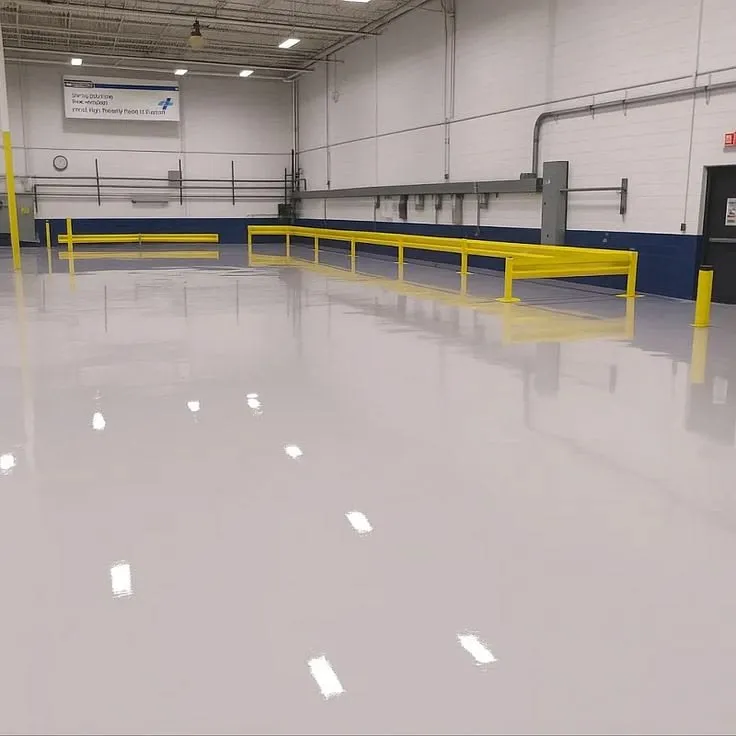
Warehouse floors often show their first signs of trouble where equipment changes direction or crosses a joint. A small broken edge can become a recurring maintenance problem when loaded forklifts follow the same route every shift. Choosing a warehouse floor coating begins with identifying these concentrated stresses rather than assuming the entire building needs an identical finish. Managers should understand how wheel loads, joint movement, substrate condition, and cleaning methods interact. This approach makes it easier to plan repairs that support daily work without promising that a resin layer can correct every underlying defect.
Look Closely at Turning Points
Forklift wheels apply concentrated pressure when carrying loads, particularly during tight turns. The surface may experience abrasion and twisting forces in locations that receive relatively little pedestrian traffic. Mapping those areas helps identify where coating wear should be monitored.
Ask supervisors which routes are busiest and whether drivers regularly manoeuvre around obstacles. Where possible, consider whether changes to traffic flow could reduce repeated stress. A flooring upgrade should respond to how machinery actually moves, not just the square footage of the building.
Understand Why Joints Matter
Concrete joints accommodate construction details and, in some cases, movement. Their edges can deteriorate under frequent crossings, especially when wheels strike damaged or uneven sections. A coating applied across a moving joint without proper detailing may crack again.
A contractor should inspect joint type, condition, loading, and expected movement before recommending repairs. Some joints need specialist fillers or other details rather than ordinary patching. Significant slab displacement requires evaluation beyond routine coating application.
Choose Systems for Concentrated Loads
Different resin products offer different abrasion, impact, and chemical-resistance characteristics. The selected system should reflect wheel materials, traffic intensity, cleaning agents, and the concrete beneath it. Thickness alone is not a guarantee of performance.
Professional industrial epoxy flooring may be suitable for parts of a warehouse when correctly specified, but heavily loaded routes can have different demands from packing stations. Request product information and an explanation of why the proposed assembly fits the actual operating environment.
Document the Problems Before Quoting
A site visit is more effective when managers can show where failures recur. Photographs taken over time, maintenance records, and observations from equipment operators help distinguish isolated damage from a repeating pattern. These details should inform the scope before work begins.
A useful inspection list includes:
-
Forklift routes and repeated turning locations.
-
Joint width, edge damage, and visible movement.
-
Wheel types, equipment loads, and traffic frequency.
-
Chemical spills and existing cleaning procedures.
-
Previous patching or coating failures.
This record makes quotations easier to compare. It also helps managers evaluate whether a contractor has considered joint treatment and repairs separately from the visible coating finish.
Sequence Repairs Around Equipment Access
Grinding and joint work may interrupt routes that connect storage racks with loading docks. Managers should identify safe alternatives or arrange a planned shutdown before bringing contractors on site. Temporary barriers and dust controls must suit the workplace.
Curing requirements deserve particular attention. A floor may permit light foot traffic before it is ready for loaded forklifts. Obtain written guidance for the actual coating and repair products, and communicate reopening times to every shift.
Keep Cleaning Compatible With the Finish
Warehouse surfaces collect grit, packaging debris, and occasional spills. Regular removal of abrasive particles can reduce wear along busy routes. Cleaning equipment and chemicals must also be compatible with the installed protective system.
Textured finishes may improve traction in particular locations but can require different cleaning techniques. Managers should assess the balance between grip and housekeeping rather than assuming one texture is appropriate for the entire facility. Report unusual wear promptly.
Review the Repairs After Reopening
A successful handover does not end when the contractor leaves. Inspect repaired joints, turning points, and adjacent coating areas after the floor returns to regular service. Keep photographs under comparable conditions so developing changes are easier to recognize.
If the same defect reappears, examine equipment movement, joint performance, and underlying concrete conditions before applying another patch. Repeated repairs without understanding the cause can increase costs and extend disruption. Maintenance records help teams make better decisions.
Conclusion
Warehouse flooring performance depends on understanding how heavy equipment, repeated traffic, and concrete joint movement affect the surface over time. Proper repairs, suitable protective coatings, and consistent maintenance can reduce avoidable deterioration and support smoother daily operations. Facility managers should prioritize accurate assessments and professional installation rather than relying on temporary fixes. Businesses throughout Toronto and Southern Ontario can explore specialized warehouse and industrial flooring solutions through quickfxepoxy.ca when planning improvements that balance durability, workplace safety, and operational efficiency.